
Each month, our team at Lightning Dental Charts reviews rulings and case discussions from the Dental Board to identify emerging themes in clinical judgment, documentation, and risk management. There was no Board meeting in May, but June’s meeting included two cases that are particularly relevant for general dentists.
The first addressed crown and bridge documentation and the importance of post-seat bitewings. The second involved a bur that became dislodged during an extraction and raised questions about prevention, referral, and charting after an unexpected event. Both June cases reinforce why dental crown and bridge documentation, extraction complication charting, and clear progress notes remain central to reducing Board exposure.
Below are the key takeaways from the June meeting, along with commentary on why these issues matter for practicing dentists and how clear documentation can reduce Board exposure.
1. Post-seat Bitewings in Crown and Bridge Cases
The first case involved a routine crown and bridge matter. There was nothing unusual about the treatment itself.
The Board reviewed the post-seat bitewing and determined that the bridge was acceptable. For many dentists, this type of image has long been considered a best practice. It helps confirm seating, margins, contacts, and overall fit. It can also become a critical piece of evidence if the restoration is later questioned. For that reason, many risk management professionals have viewed a post-seat bitewing as a practical “get out of jail free card” in crown and bridge cases.
What made this case noteworthy was that the Board upgraded the post-seat BW as part of the standard of care. If a post-seat bitewing is treated as standard of care, then failing to take one may create Board exposure even in an otherwise routine crown and bridge case.
Key Takeaway
After seating a crown or bridge, dentists should strongly consider taking and documenting a confirmatory bitewing. From a documentation standpoint, the chart should clearly reflect:
- The restoration delivered
- The post-seat radiograph taken
- The dentist’s evaluation of the image
- Any seating, margin, or occlusion adjustments made
- The patient’s condition and instructions at dismissal
The clinical dentistry may be entirely appropriate. However, if the confirming image is missing, the dentist may face Board scrutiny or censure. This is a instructive example of how Board expectations can evolve. What was previously viewed as a strong protective habit may become something closer to an expected part of the record.
2. When a Bur Is Swallowed or Aspirated During an Extraction
The second case involved an extraction complication. During the procedure, a bur released from the handpiece chuck and was either swallowed or aspirated by the patient. The Board discussed whether a throat pack would have prevented the accident and whether using one should be considered the standard of care for extractions.
The Board concluded that a throat pack is not the standard of care for routine extractions. However, the Board opted to further extend its inquiry. Once the bur became dislodged and could not be located, the question became whether the dentist responded appropriately and documented the event properly.
The proper protocol in this type of situation includes:
- Clinical search of the oral cavity
- Valsalva maneuver
- Panoramic radiograph
- Referral for chest x ray or appropriate medical evaluation
In this case, medical providers ultimately identified the bur in the intestine and removed it before it passed. The case was dismissed, but the dentist received a letter of concern for failing to refer the patient and record the events properly.
Key Takeaway
Unexpected events do not automatically become Board violations. The greater risk often comes from failing to respond, refer, and document appropriately once the event is known.
When a foreign object is swallowed or aspirated during treatment, the chart should clearly establish:
- What occurred
- What steps were taken immediately in the office
- Whether the object was locate
- What imaging was obtained=
- What referral or medical evaluation was recommended
- What the patient was told
- What follow up instructions were provided
A complication is always easier to defend when the record shows recognition, communication, escalation, and follow through.
Final Thoughts
June’s cases reinforce two practical lessons for general dentists. First, routine crown and bridge cases still require careful documentation. A post-seat bitewing is now the SOC in the Board’s view. Second, unexpected procedural events must be charted carefully and managed promptly. When something unusual occurs, the record should make clear that the dentist recognized the problem, communicated with the patient, took appropriate steps, and arranged referral when needed.
In both cases, the Board’s focus was not limited to the technical dentistry. It also looked closely at whether the chart contained the information needed to explain and defend the dentist’s actions after the fact.
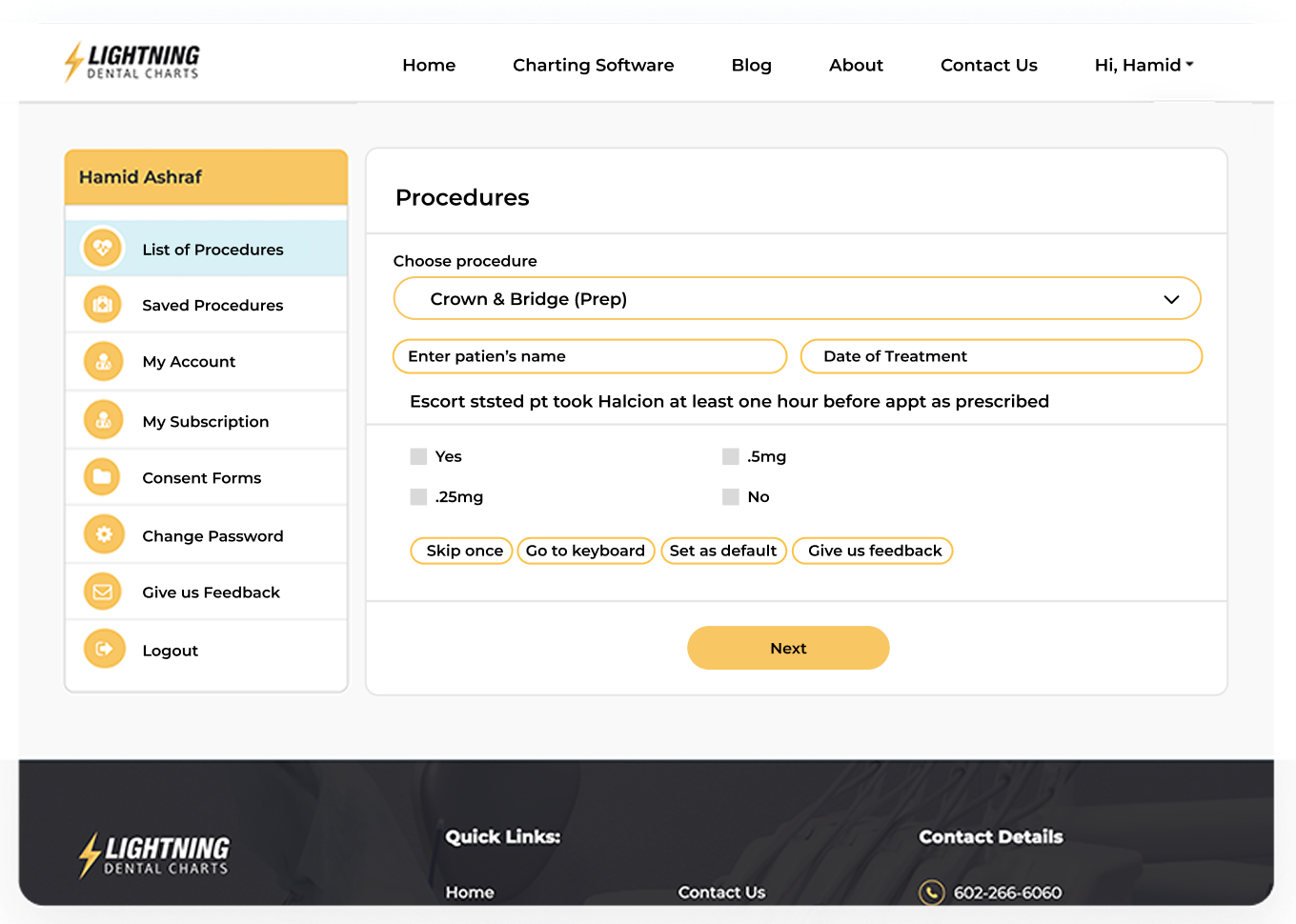
Lightning Dental Charts is designed to help practices create thorough, defensible records efficiently through structured prompts, procedure specific workflows, and documentation safeguards that align with how Boards actually review cases.
If you would like to strengthen your documentation workflow while reducing legal exposure and saving time charting, explore Lightning Dental Charts with our 14 day free trial.